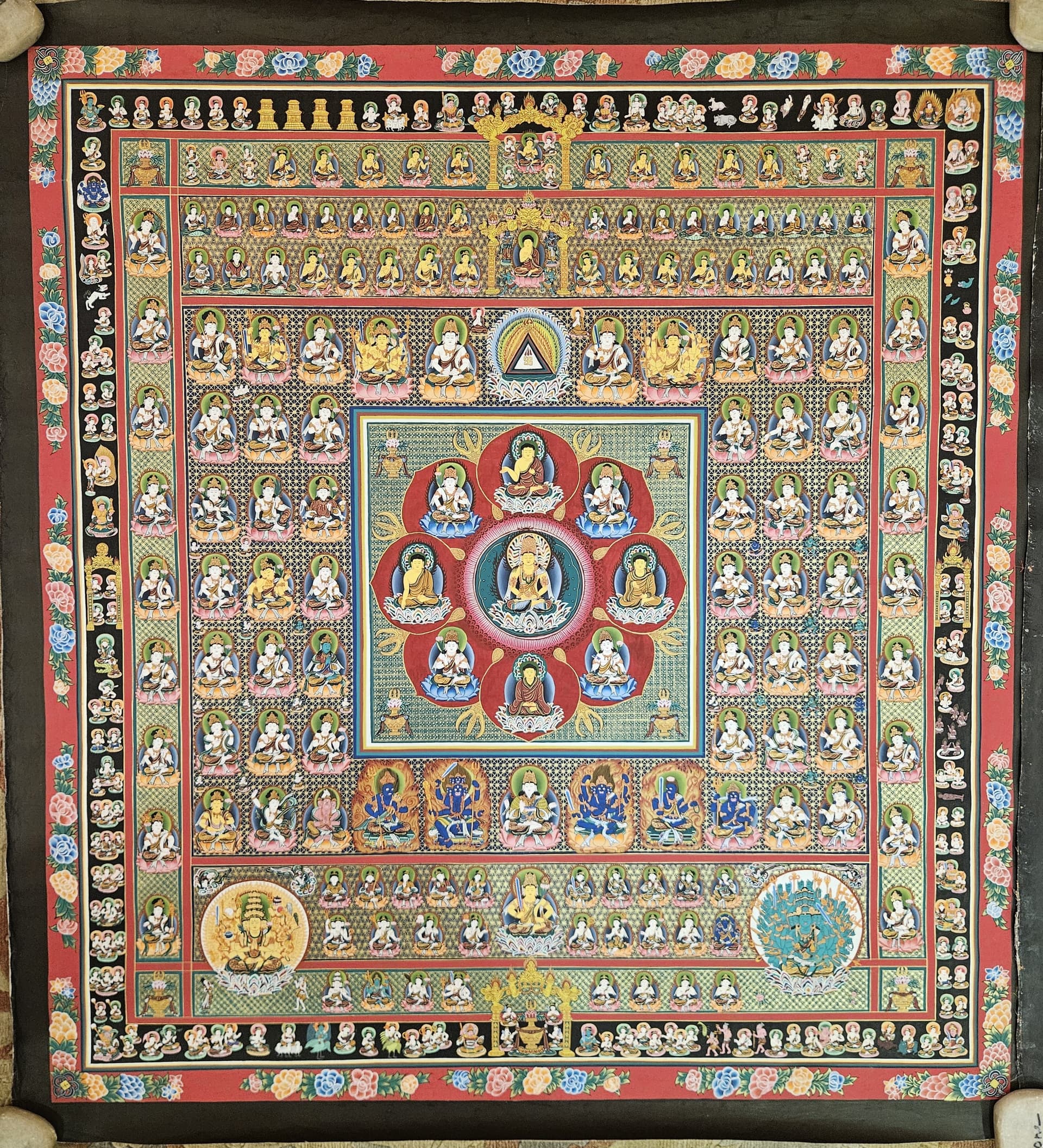
High in the Himalayan world that stretches from the Kathmandu Valley to the Tibetan plateau, two closely related but distinct painting traditions have carried Buddhist and Hindu iconography across centuries. Both are scroll paintings created as objects of devotion rather than decoration — meditation aids, ritual tools, and vessels believed to actually house the presence of the deity they depict. Newar artists from the Kathmandu Valley were, historically, instrumental in shaping Tibetan painting itself, yet each tradition developed its own vocabulary of colour, proportion, ritual, and technique.
What is a thangka?
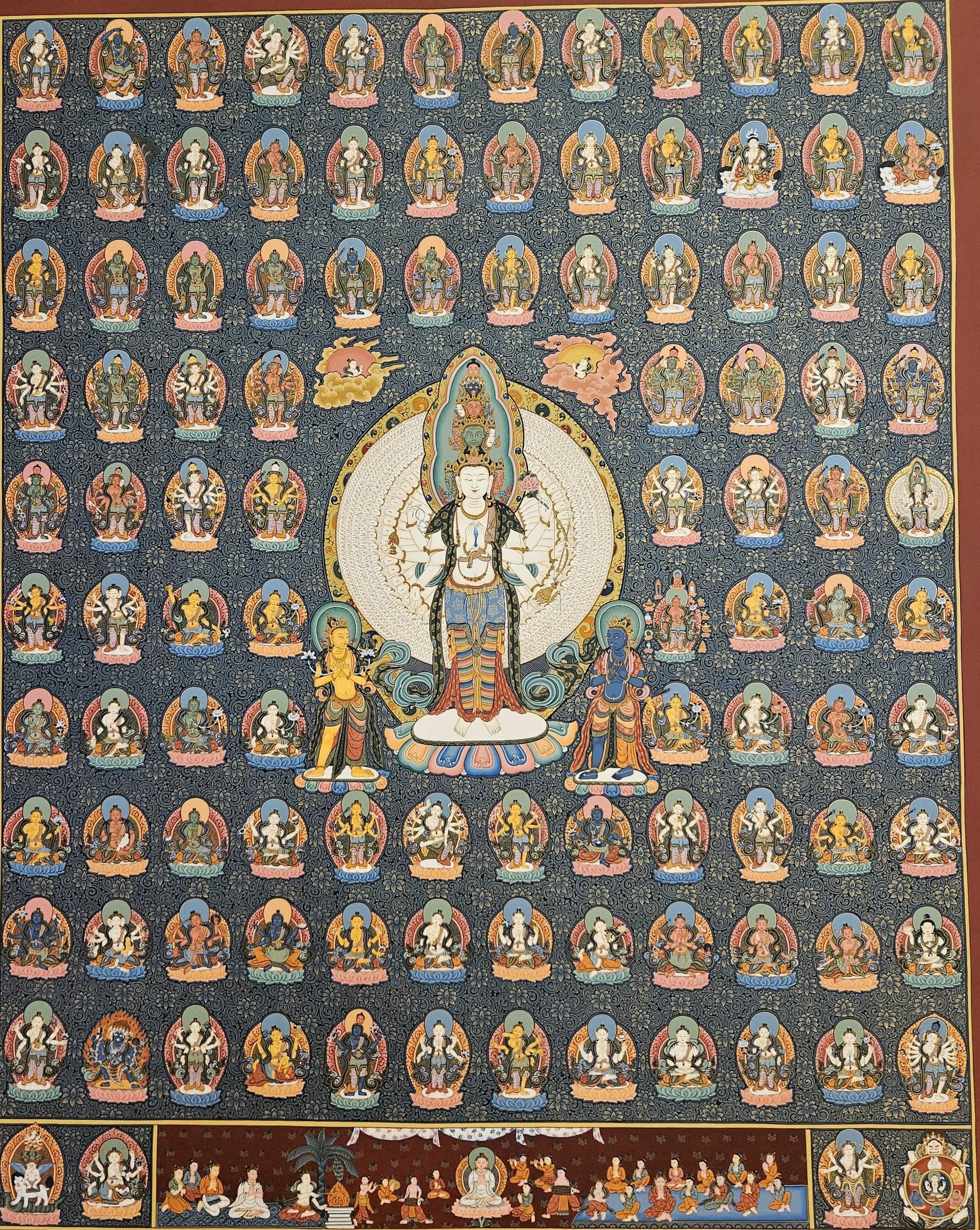
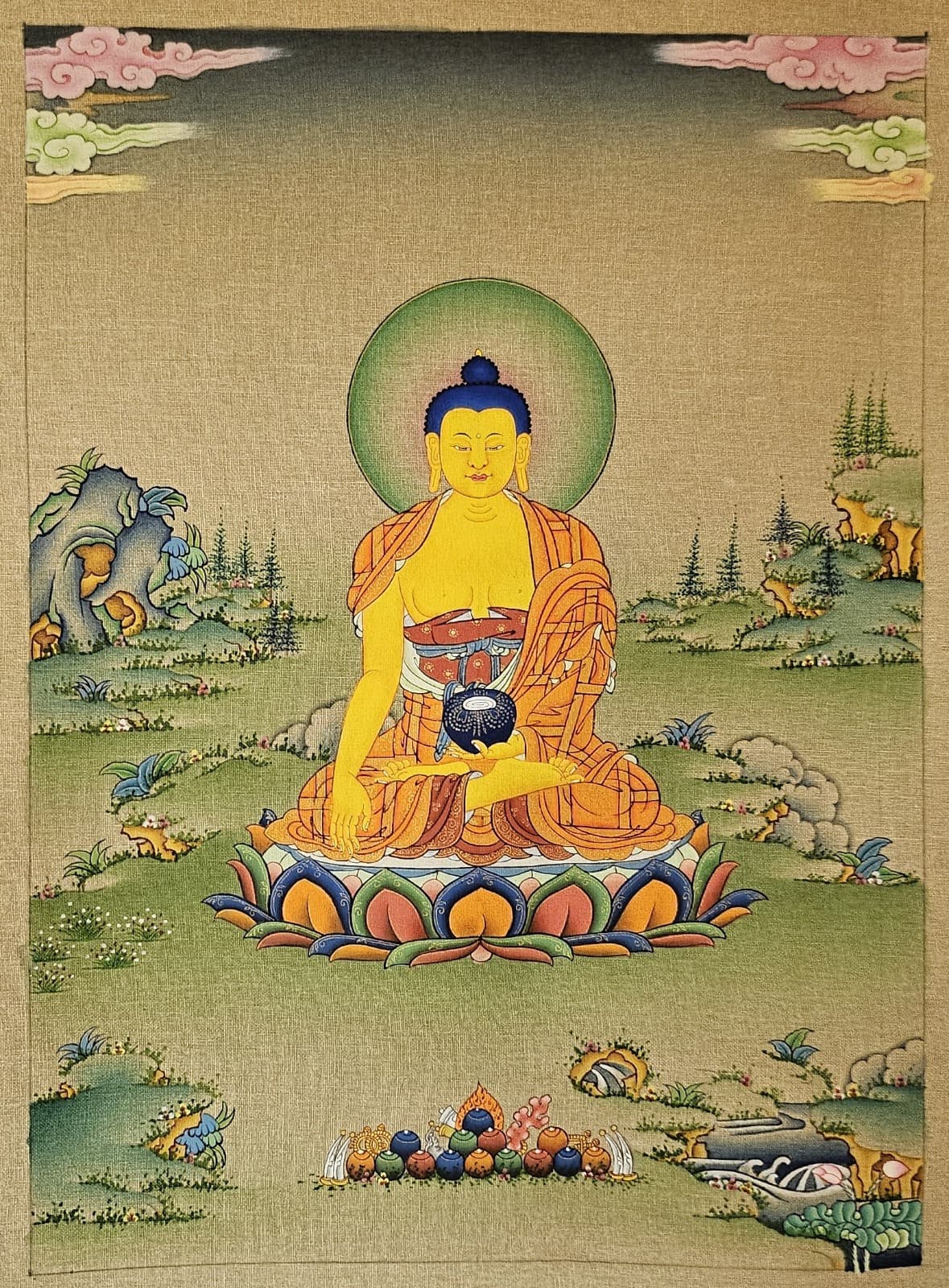
A thangka (also spelled tangka or thanka) is a Tibetan Buddhist painting, usually on cotton or silk, that depicts a deity, mandala, or scene from Buddhist teaching. Unlike a mural, a thangka is portable: it is mounted in a textile frame, often rolled up, and can be carried between monasteries or on pilgrimage. That portability made thangkas essential tools for teaching and ritual across a vast and mountainous region where texts and images needed to travel.
Materials and surface
Traditional thangka painters do not use ready-made canvas. The process begins with cotton cloth stretched taut over a wooden frame (Tibetan: rkyang shing), coated with a layer of white paint to form the ground. The most common stretcher size for a single thangka is roughly two by three feet, though historically silk, linen, and even leather were used as supports. The paint itself is distempered: powdered mineral and plant pigments bound with a dilute hide-glue size, producing a fast-drying, water-soluble paint that dries to a matte finish.
Iconometry
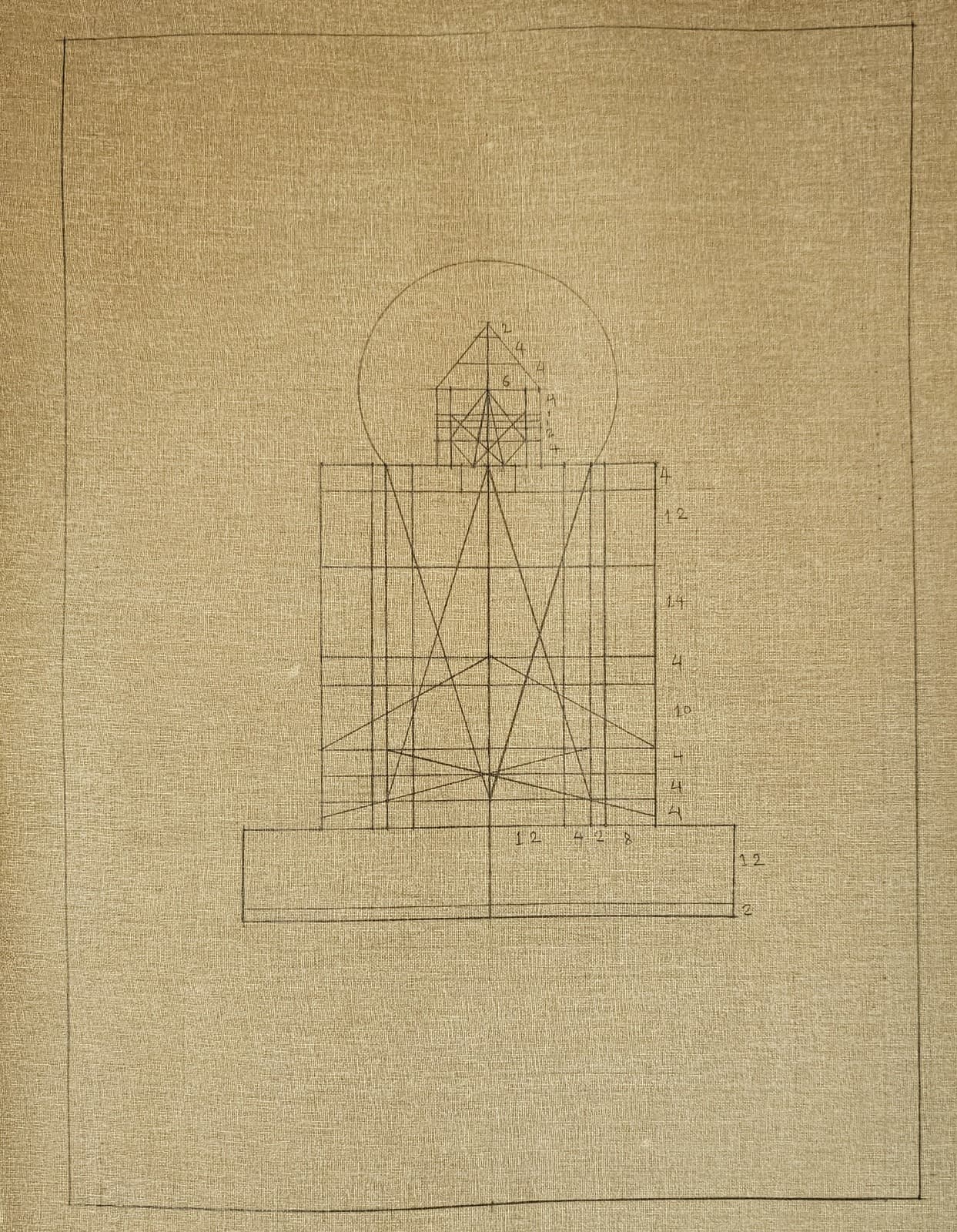
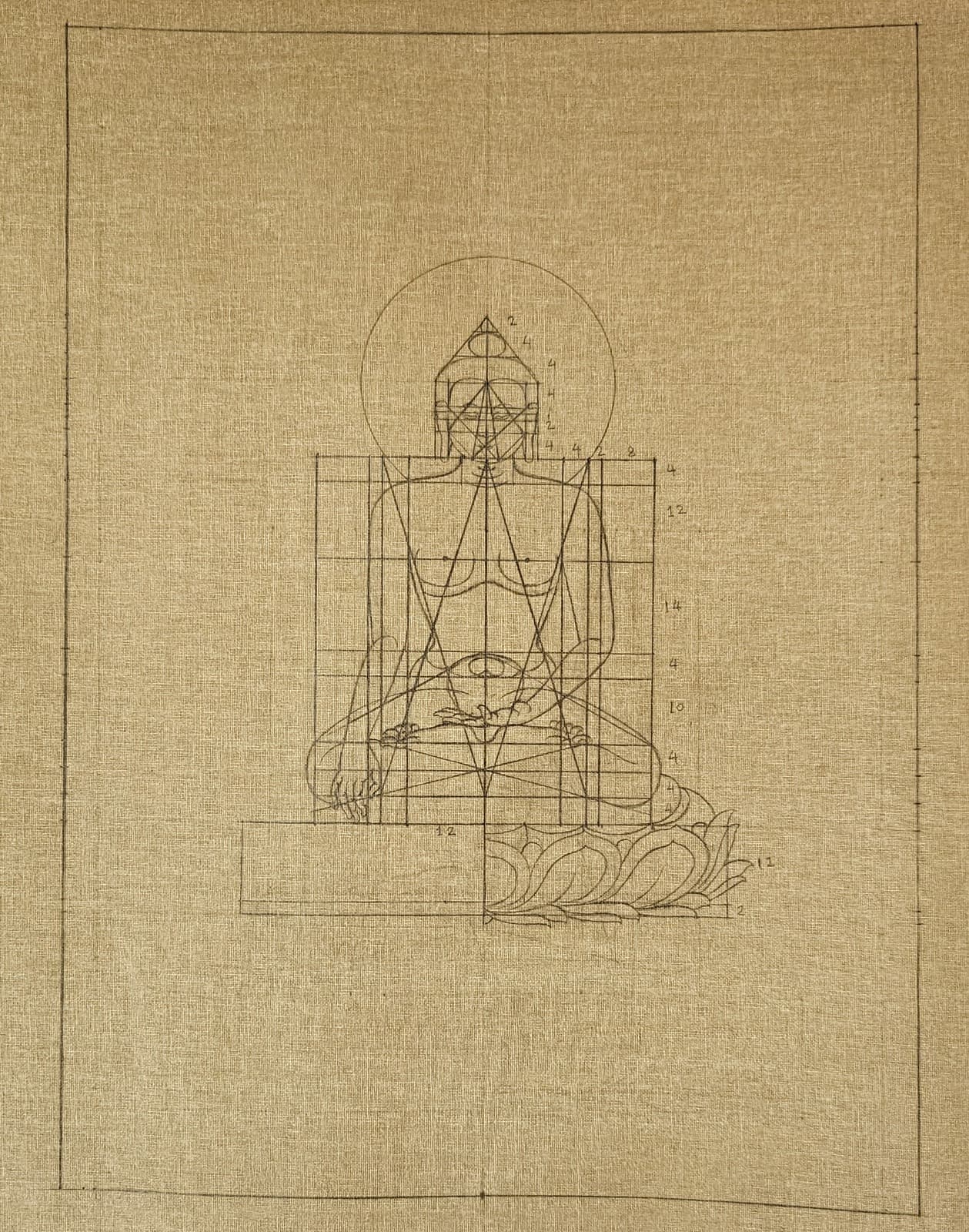
A thangka painter must know the exact proportions prescribed for each deity. These guiding principles, maintained through artistic tradition, use units that carry no fixed size but remain proportional to one another — twelve small units making up every large unit. A Buddha, a wrathful protector, and a bodhisattva each have their own canon of proportion, drawn from scripture and passed down master to student. Nothing is left to individual license: the geometry itself is considered sacred, because an incorrectly proportioned deity is thought to be spiritually ineffective — or even harmful.
Colour
Every colour carries meaning. White is associated with purity and knowledge, red with power and life-force, blue with infinity and the sky, yellow with earth and renunciation, black with the destruction of ignorance, and green with balance and activity. Traditional pigments came from ground minerals — malachite for green, azurite or lapis lazuli for blue, cinnabar for red, orpiment for yellow — along with gold, applied as fine powder or leaf for halos, jewellery, and rays of light.
Opening the eyes
The painting of the deity's eyes is reserved for last, and is treated as the most consequential moment in the entire process. Only once the eyes are complete does the painting become a true representation of the deity. Consecration follows: mantra syllables corresponding to the deity's head, throat, and heart are inscribed on the reverse of the canvas, after which the deity is believed to inhabit the image. Without this ritual, a thangka — however technically accomplished — remains an unconsecrated picture rather than a living sacred object.
Mounting
Once painting is complete, the canvas is trimmed and mounted into a brocade frame with proportional rules of its own: the bottom section is half the height of the painted area and widens slightly toward the bottom, the top section is half the height of the bottom, the side pieces are half as wide as the top section is tall, and the inner border is usually a quarter the width of the sides. The edges are hemmed with cord and wooden rods inserted at top and bottom — the bottom rod capped — so the finished thangka can be rolled and unrolled like a scroll.
What is a paubha?
Paubha is the sacred scroll-painting tradition of the Newar people of Nepal's Kathmandu Valley — practised by artists of the Chitrakar caste, whose very name means “painter” and whose craft has traditionally passed from father to son within the family lineage. Newar paintings are known as paubha in Newari and pata in Sanskrit, usually rectangular, prepared from cotton woven specifically to the dimensions each painting requires. Where thangka is exclusively a Buddhist form, paubha weaves together both Hindu and Buddhist imagery — a reflection of the Valley's long history of religious coexistence.
Origins and history
“Paubha” derives from the Sanskrit “Patrabhattarak,” meaning the depiction of deities on a flat surface. References appear as far back as the tantric text Manjushree Mulakalpa, associated with the 3rd century A.D., and oral history extends the practice back beyond the 7th century. The form reached particular refinement during the Malla era (roughly the 12th to 18th centuries), when the Valley's kings were significant patrons and paubha painting achieved new levels of delicacy and depth.
A two-way exchange
Newar artists were prized far beyond the Valley: Tibetan paintings from the ninth through seventeenth centuries were, stylistically, overwhelmingly Nepali in character. Some accounts describe paubha as a direct precursor to the thangka, carried over Himalayan passes by merchant-monks; others describe it as developing under later Tibetan influence. The honest answer is that the two traditions grew up side by side in close, ongoing exchange, making a clean one-directional story hard to sustain.
Preparing the canvas
As with thangka, everything begins with the surface. The artisan stretches a piece of cloth and applies a mixture of buffalo glue and white clay to create the ground. Some accounts describe the base layer slightly differently — cotton or linen coated with chalk and animal glue — but the principle is consistent: an animal-glue binder combined with a fine white mineral filler, burnished until smooth enough to take fine detail.
Ritual before craft
Paubha painting is inseparable from ritual observance. Historical descriptions detail purificatory rites for preparing materials, an empowerment ceremony for the artist known as hastapuja, and periods of mental and spiritual preparation before the artist is considered ready to complete the painted image — culminating in consecration rituals that animate and vivify the finished work. The creative process begins with prayers and blessings, after which the artist outlines the composition according to iconometric measurements drawn from ancient scripture.
Pigments and colour
Paubha pigments, like those of thangka, come from the earth and from plants. Colours are prepared exclusively from mineral and plant materials, requiring extensive manual grinding, with red, blue, yellow, black, and white among the core palette and a binder called saresh used to fix the pigment to the surface. Gold leaf or powdered gold frequently accentuates fine details and lends a divine luminosity, particularly in depictions of celestial realms and heavenly beings.
Format and subject
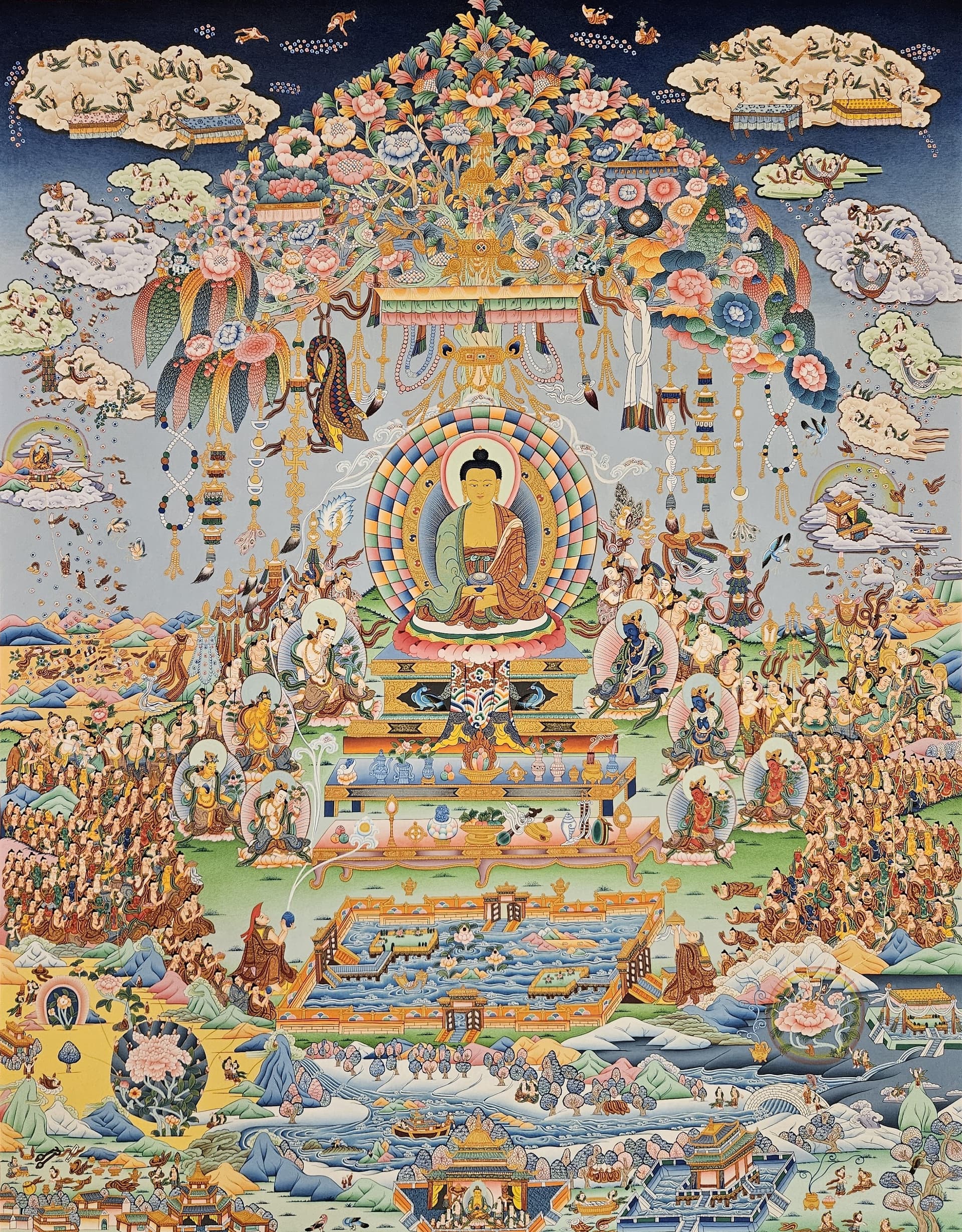
The vertical scroll format suited a practical purpose: it could be rolled up and carried over high Himalayan passes to clients in Tibet, then installed as a focal point for meditation or worship inside a monastery or temple. Subject matter centres on important deities, mandalas of divine assemblies, and monuments surrounded by attendant figures. Unlike Tibetan thangka, which range from modest scale up to enormous ceremonial display pieces, Newar paubha tend to keep to a more uniform, moderate size.
Decline and revival
Political upheaval at the end of the Malla era, combined with the physical fragility of cloth as a medium, contributed to the decline of the traditional practice, and today only a small number of traditional painters remain, with many of the accompanying rituals largely lost. In recent decades, however, a modest but meaningful revival has taken hold, with Chitrakar families and dedicated teachers — workshops around Patan and Bhaktapur are especially known for this — working to keep the art, and the ritual knowledge behind it, alive for a new generation.
In closing
Both thangka and paubha painting demand something rare in any craft: total discipline in service of something the artist did not invent. The proportions are prescribed, the pigments are earned through hours of grinding stone, and the final brushstroke — the opening of the eyes — is treated not as the artist’s flourish but as the moment the painting stops being a picture and starts being a presence.

 II
II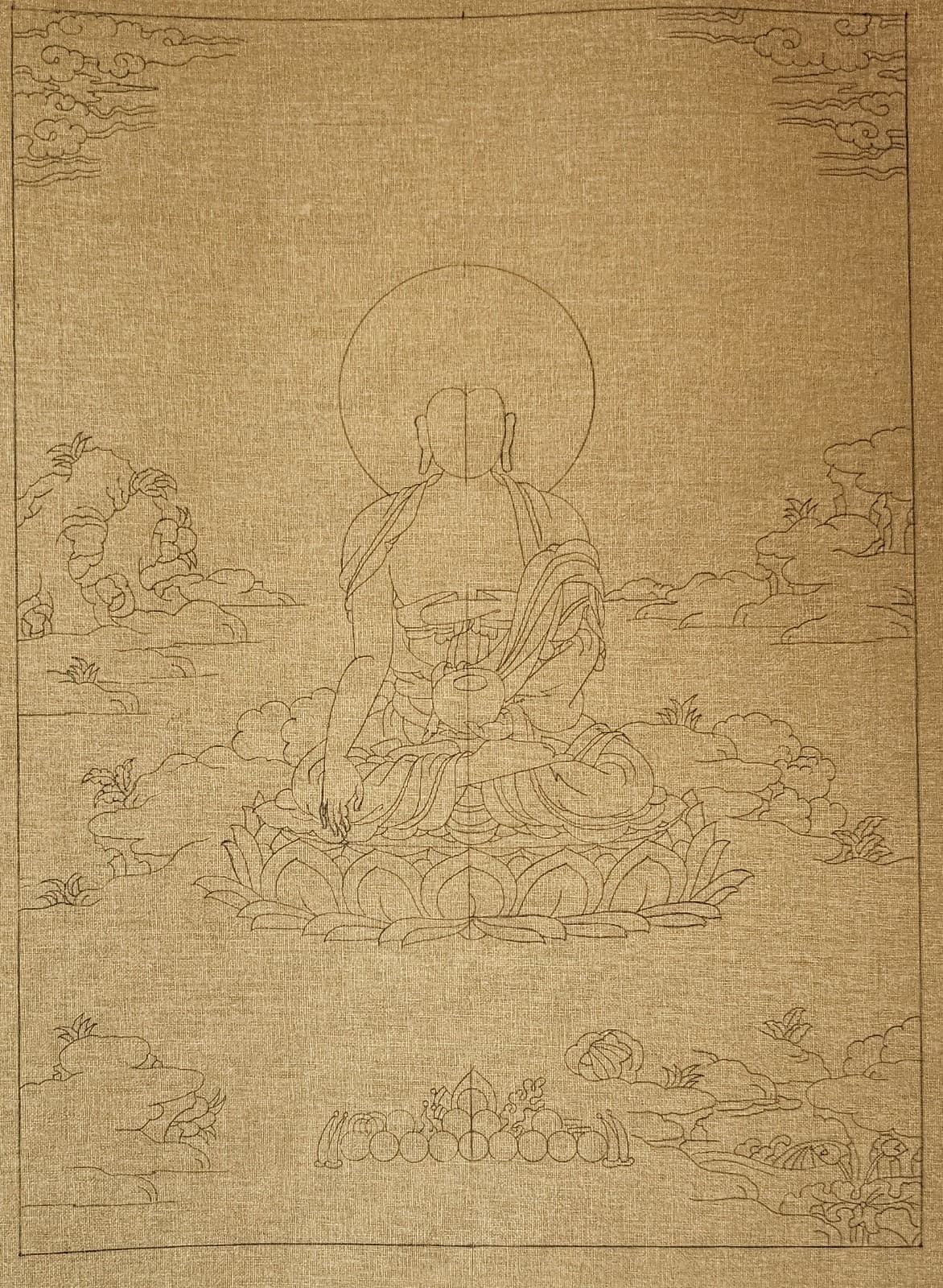 III
III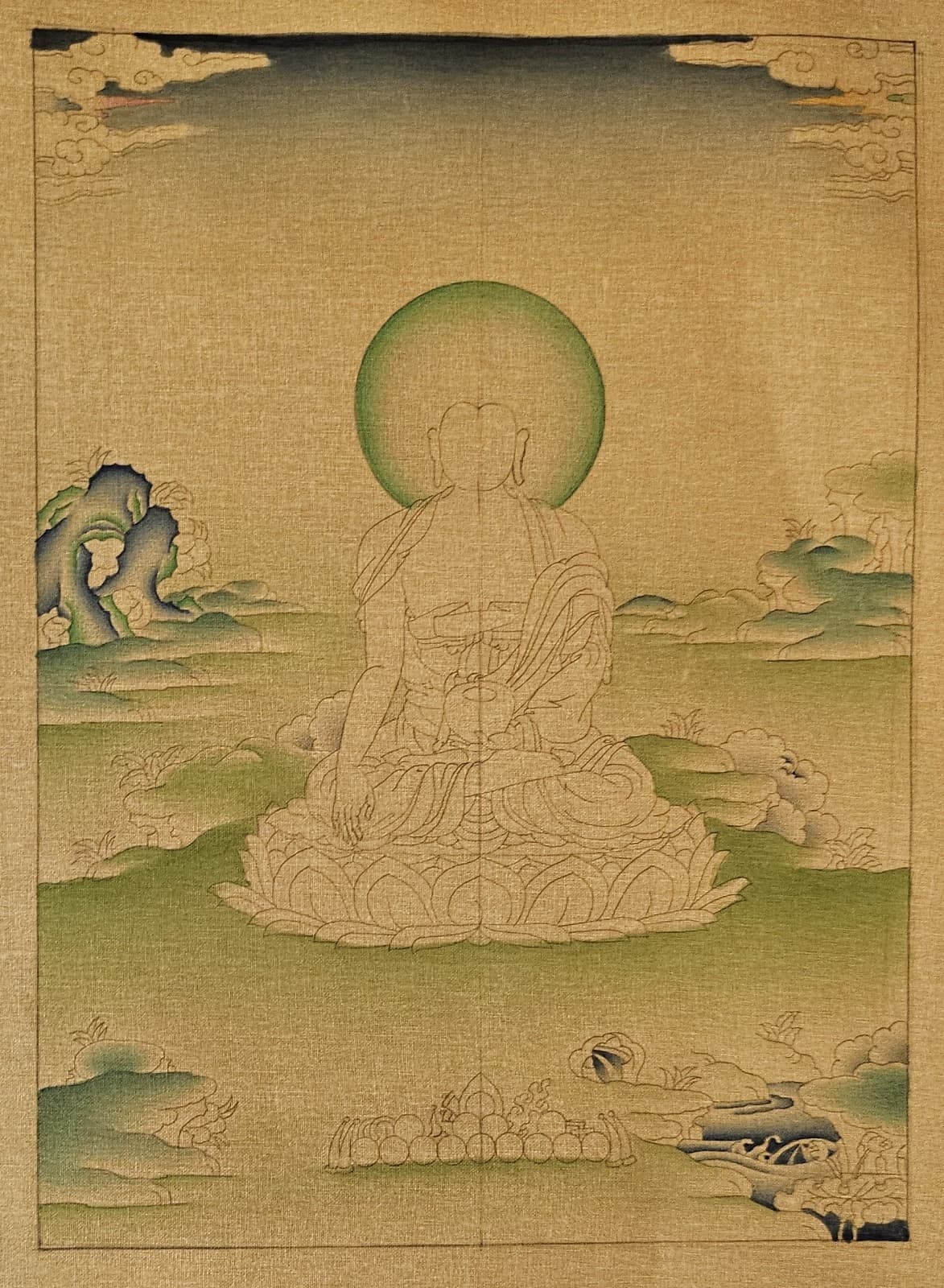 IV
IV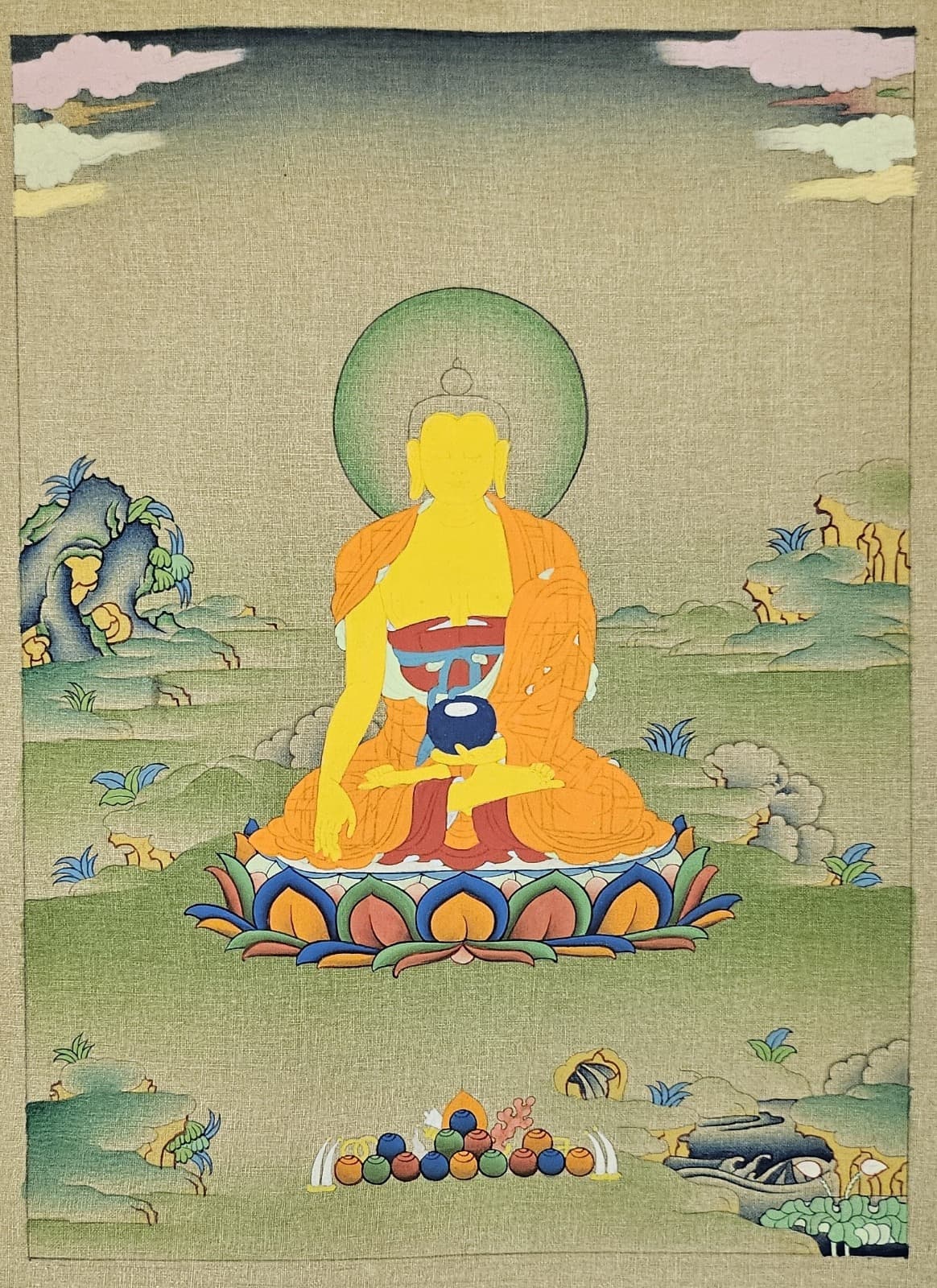 V
V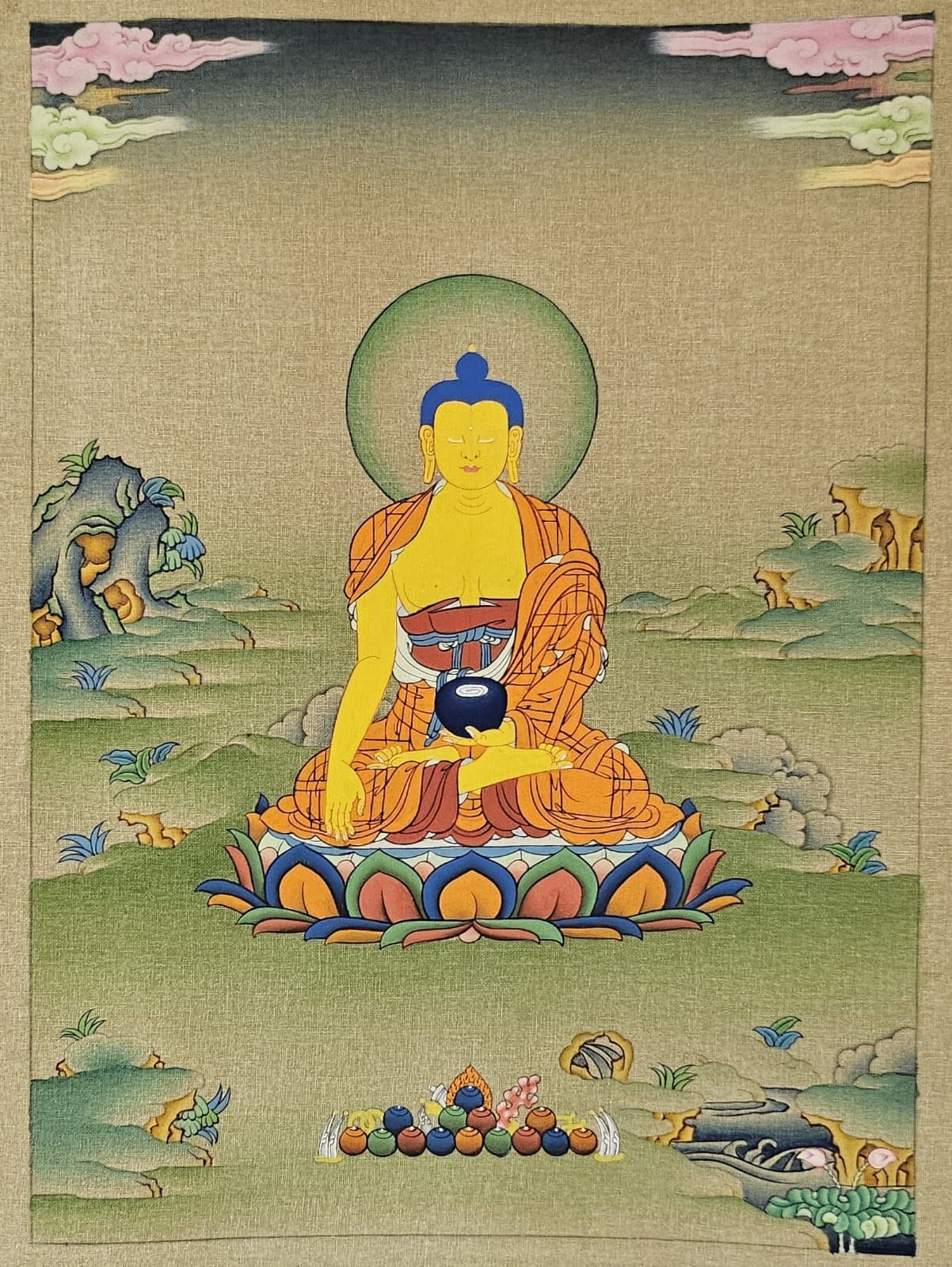 VI
VI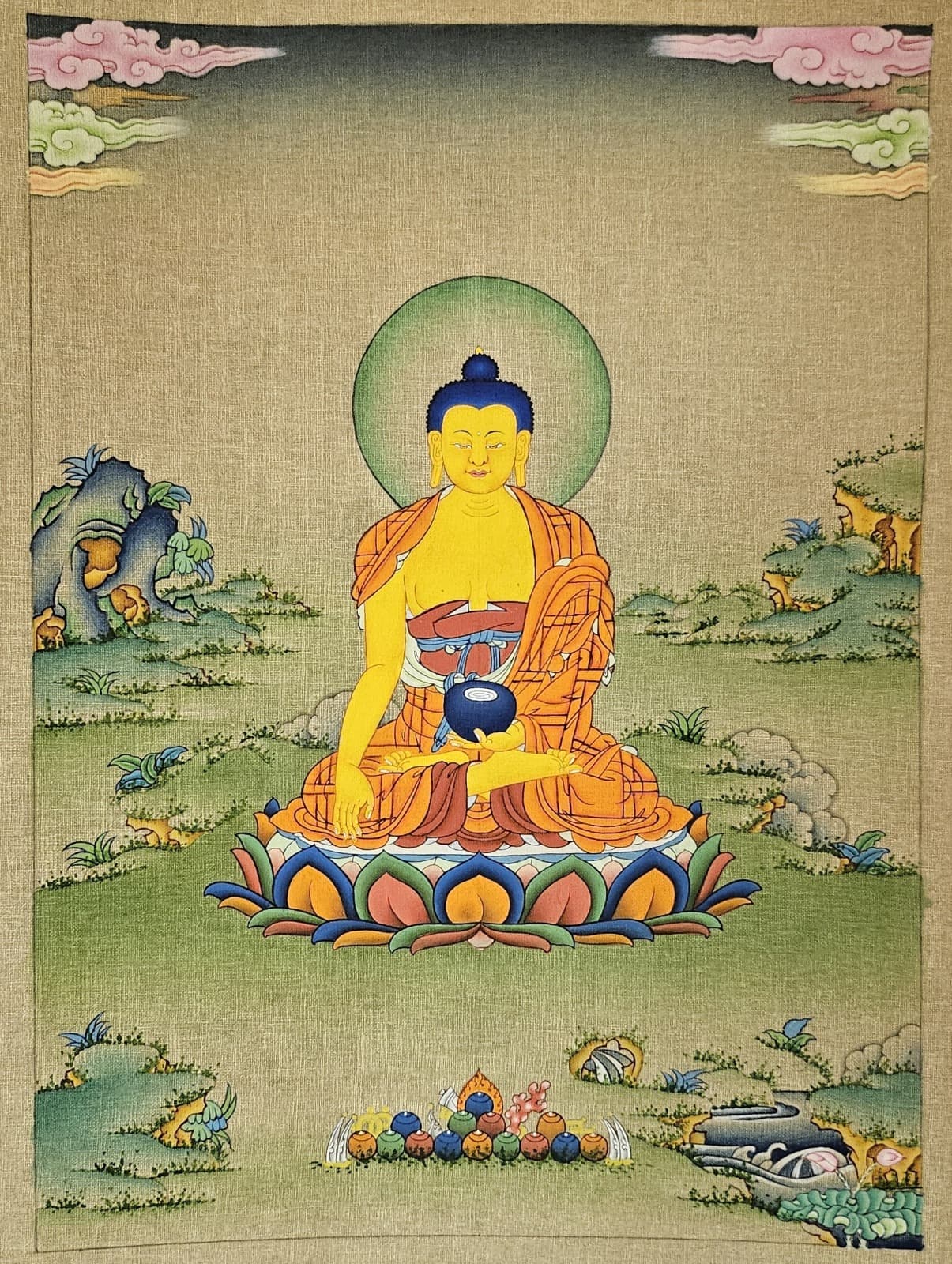 VII
VII